Healthcare Cybersecurity · Updated November 17, 2026
Why Is Healthcare Data Such a Prize for Hackers?
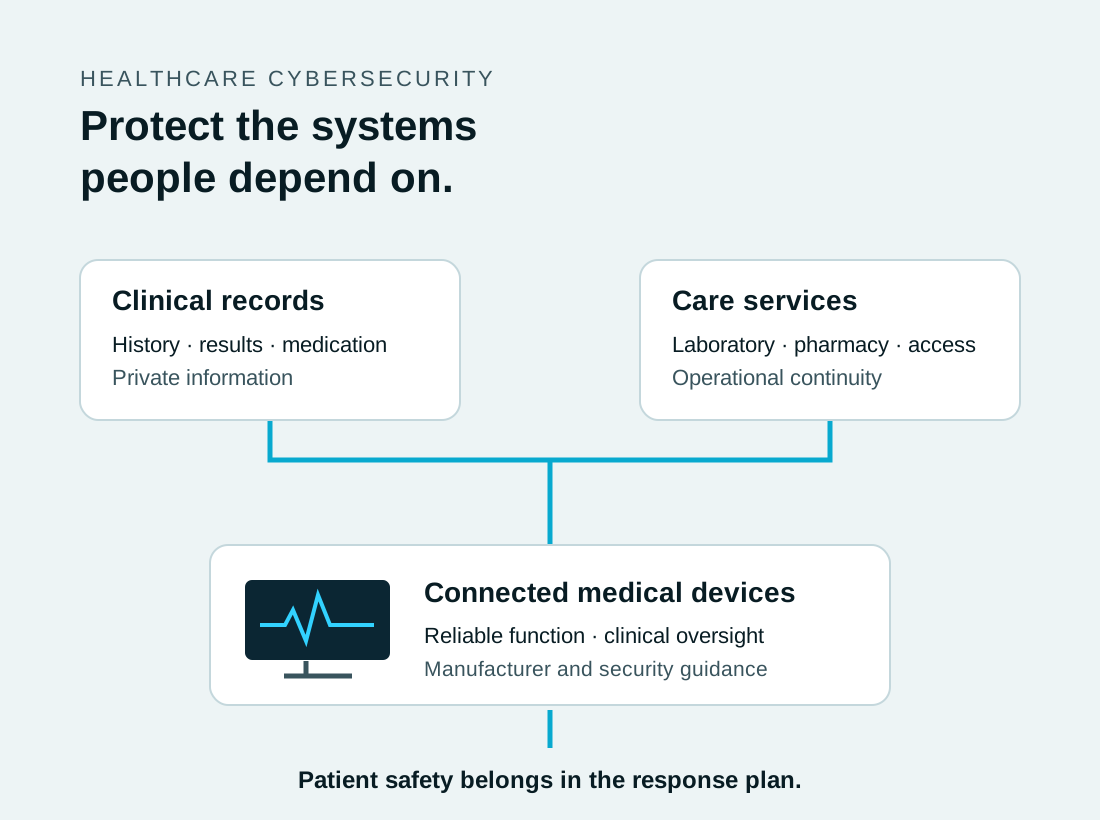
Stolen records can fuel fraud. Unavailable systems can interrupt care. Recent provider disclosures and government findings show why protecting a hospital means accounting for its data, its connected devices and the patients who depend on them.
Evidence from providers and public authorities · Sources checked November 17, 2026
A Medical Record Gives Criminals More Than a Name
Health records bring identifying details together with information about a person’s care. HHS describes records that include medical history, medications and test results, alongside identifiers such as health plan and account numbers. That combination gives stolen information uses beyond a contact list. HHS background on electronic medical records.
The FTC explains that stolen identity or insurance details can be used to obtain treatment, prescriptions or medical devices, or to submit insurance claims. If another person’s health information is mixed into the victim’s record, care and insurance benefits can be affected. These are potential consequences of medical identity theft, not outcomes established for every breach victim. FTC guidance on medical identity theft.
Ransomware Turns Lost Access and Stolen Records Into Pressure
The July 2025 federal Interlock advisory describes attackers stealing information before encrypting systems, then using both disruption and threatened disclosure to demand payment. This is called double extortion. It explains why restoring systems and determining what was taken are separate jobs. FBI, CISA, HHS and MS ISAC advisory.
What Recent Healthcare Disclosures Actually Show
The incidents below are documented examples. Their attack dates and later reporting dates are kept separate.
Kettering Health: Procedures Canceled, Emergency Care Continued
On May 20, 2025, Kettering Health reported unauthorized network access and canceled that day’s elective inpatient and outpatient procedures. Its emergency rooms and clinics remained open. Its recovery updates later reported resumed surgeries and normal operations for key services. The incident shows how a technology outage can interrupt scheduled care without closing every part of a health system. Kettering’s incident and recovery updates.
DaVita: Data Theft Alongside Operational Disruption
In its February 2026 annual report, DaVita said an April 2025 cyber incident disrupted operations and exposed data that included personal and protected health information. It also stated that patient care continued throughout the incident and response. That qualification matters: confirmed data theft and business disruption do not establish that treatments stopped. DaVita’s 2025 annual report.
Manage My Health: Patient Credentials Reached Other Patients’ Documents
New Zealand’s Privacy Commissioner reported in May 2026 that stolen patient credentials had been used to copy documents from other accounts. The December 2025 breach affected 99,416 patients and one portal module, My Health Documents. Phase one findings. The regulator’s October 2026 final report described continuing distress and damage to trust in health portals. Final findings, October 30, 2026.
The Consequences Can Reach Patient Safety
In a July 3, 2026 parliamentary answer, the UK government said the 2024 attack affecting pathology provider Synnovis delayed more than 11,000 outpatient and elective procedure appointments and contributed to a patient’s death. That is a documented contribution to harm, not a claim that ransomware was the sole cause. UK government statement on the Synnovis attack.
For hospital leaders, the implication is practical: cyber incident planning needs clinical leadership as well as IT. The response has to account for how care continues when a necessary service is unavailable, and how the effects on patients are recorded. A restored server alone does not tell that story.
Connected Medical Devices Add a Different Safety Risk
The FDA’s 2025 Contec CMS8000 and Epsimed MN-120 monitor warning described vulnerabilities that could permit unauthorized access and device manipulation. Its July update said a patch removed networking functionality. The FDA also said it knew of no related cybersecurity incidents, injuries or deaths at that time. This was a vulnerability warning, not proof of an attack on patients. FDA patient monitor safety communication.
Our view is that device response belongs with the clinical, biomedical engineering and security teams together. They need the manufacturer’s current guidance, the device’s actual role in care and an agreed alternative before changing how it operates. A general instruction to disconnect equipment is not a substitute for that decision.
Make the Security Plan Work for the Hospital
The federal Interlock advisory recommends network segmentation, current software and firmware, stronger identity controls and multifactor authentication where possible. Read the defensive recommendations. Applying those controls in a hospital also requires an agreed scope for clinical systems and the people responsible for them.
GDF’s work starts with that operating context. Our healthcare cybersecurity and forensic services can examine access records and the evidence of a breach, while our incident response planning and retainers help define the response before an incident. We work with the organization’s authorized teams to scope the technical work and preserve the records needed to explain what happened.
If you are facing an active incident, call the hotline. For a readiness review, tell us which records, connected systems and outside services your care teams depend on. The first consultation is free. Keep patient information and credentials out of the inquiry form.
Offsite references open in a new tab after the GDF leaving notice. Dates below identify the source publication or update, not necessarily the incident.
Tell us the systems, the concern and who is responsible for their operation. We will discuss a practical scope with your authorized team. The initial consultation is free.
Global Digital Forensics has served law firms and businesses since 1992. Court tested examiners. National coverage. 24/7 hotline.
Reviewed by Joseph Caruso, Founder, CEO and CTO, CISSP. Last reviewed .