
EDNY
eDiscovery in the Eastern District of New York
Preservation, collection, processing, review support and production for matters in EDNY. The plan follows the assigned order, available source access and agreed production requirements.
The engagement
What the EDNY eDiscovery engagement covers
The Eastern District of New York covers Brooklyn, Queens, Staten Island, Nassau and Suffolk. The assigned order sets the discovery schedule. Early decisions about preservation, collection and production affect which records remain available and how the receiving team can use them.
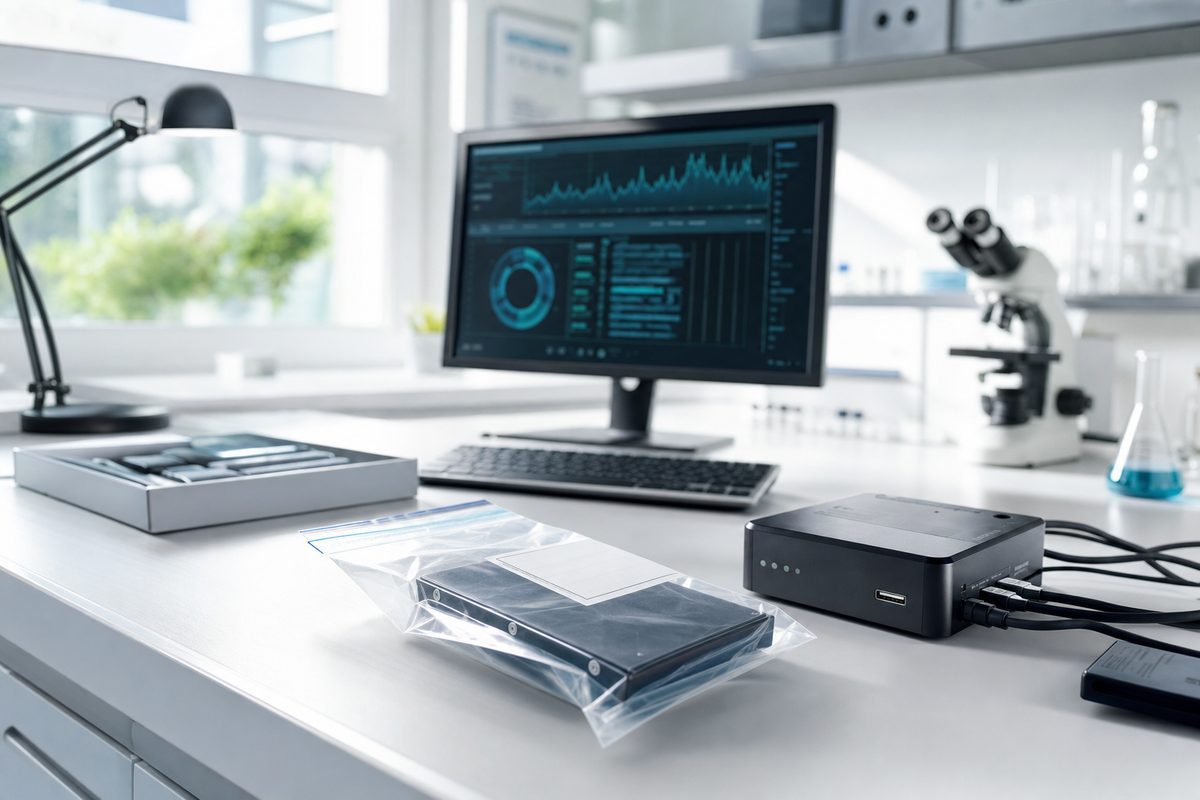
GDF supports EDNY matters end to end on the technical side: preservation on notice, defensible collection at the source, processing that respects FRCP Rule 34 production form obligations, review-platform loading, production in the form the receiving party actually uses, and, where retained for it, expert-witness testimony on the technical record. Collections are routinely performed on site at Brooklyn, Queens, Nassau and Suffolk custodian locations.
The engagement is scoped up front against the EDNY chambers' individual practices and the Rule 26(f) discussion. Where the case management order requires an ESI protocol, the protocol is negotiated on the technical detail (source coverage, collection tools, processing conventions, production form) with the goal of avoiding preventable motion practice later.
Scope
Legal holds and preservation
Written hold notices, custodian interviews and preservation-in-place or targeted preservation collection depending on the source. For matters with custodians across Brooklyn, Queens and Long Island, preservation coordination is centralized so the record shows one clean timeline of what was held and when.
On-site collections across the district
On-site collection at custodian locations in Brooklyn (DUMBO, Downtown, Williamsburg, Sunset Park), Queens (Long Island City, Flushing, Jamaica), Nassau (Uniondale, Garden City, Mineola) and Suffolk (Melville, Hauppauge, Riverhead). Forensic imaging with write-blockers, chain-of-custody documentation completed on site.
Cloud and SaaS collections
Cloud mailboxes, chat, files and admin logs collected via first-party APIs (Microsoft Purview eDiscovery, Google Vault, Slack eDiscovery API, Zoom compliance APIs) where available, third-party connectors where not. Retention policy interactions are documented so the record shows what could and could not be preserved.
Processing and review-platform loading
Deduplication, near-duplicate suppression, email-thread analysis, technology-assisted review workflows, and loading to Relativity, Reveal, Everlaw, Nuix Discover or DISCO. Structured data (financial systems, ERP, warehouse management, driver ELDs for Long Island logistics matters) is normalized so it can sit alongside the unstructured record in review.
Production
Load files (Concordance DAT, Relativity RDX, EDRM XML) matching the receiving party's specifications. Native production where the record actually requires it. Slip-sheeting for withheld and redacted documents.
Expert-witness testimony
Where the collection or production method is challenged, GDF provides the technical record and, where retained for it, expert testimony in Brooklyn or Central Islip chambers.
Evidence commonly reviewed
Evidence reviewed
- Chain-of-custody records for every on-site collection
- Collection logs (tool, version, target, hash) for every device or tenant
- Processing manifests with dedup and near-dup counts
- Load-file specifications and production manifests
- Cloud tenant preservation and retention-hold audit trails
What you receive
Deliverables
- Preservation notice templates aligned to Rule 26(f) practice
- On-site collection reports usable as exhibits
- Processed data loaded to the review platform of record
- Production sets in the form the receiving party accepts
- Expert report on the collection or production method where the matter reaches it
Engagement workflow
How the engagement runs
Preservation across Long Island custodians
EDNY matters commonly involve custodians across Brooklyn, Queens, Nassau and Suffolk. Preservation is coordinated from the Manhattan intake with a single preservation notice tailored to the matter, and tenant-side holds (Purview eDiscovery, Google Vault, Slack retention, Zoom compliance) are placed for the relevant custodians and time windows. Where a Nassau or Suffolk custodian is using a small-business set of SaaS accounts, preservation extends to the specific accounts that carry the record rather than a broad tenant-wide hold.
On-site collections in Brooklyn, Queens and Long Island
If an on-site collection is needed in Brooklyn, Queens, Nassau or Suffolk, confirm the address, authorized receiver, appointment, supported method and operating window. Travel and collection time depend on the actual sources and available examiner. The handling record identifies condition, acquisition coverage, tool version, known changes and integrity checks appropriate to the output, with photographs where useful. Travel, acquisition and analytical review are separate tasks with confirmed milestones.
Processing under EDNY requirements
Processing follows the same defensible pipeline used across the practice: file identification, text and metadata extraction, dedup and near-dup, threading, language identification and exception logging. Where the assigned EDNY chambers have set an ESI protocol, processing conventions are aligned to the protocol before ingestion begins; where the protocol is silent, standard eDiscovery Reference Model (EDRM) conventions are followed and documented.
Review hosting and access controls
Review is hosted on the platform of record chosen by counsel. For EDNY matters, workspace access is scoped tightly: reviewer accounts are provisioned only for the specific engagement, MFA is enforced, and workspace access reports are produced on cadence so counsel has a record of who accessed the workspace and when. Where the matter is subject to a protective order that limits access to attorneys' eyes only, access controls implement the protective order in the platform.
Production and post-production support
Productions are prepared in the form the receiving party accepts (image with load file, native with load file, or hybrid), with Bates-numbering, confidentiality endorsements, redactions and privilege logs prepared to counsel's specification. Where a later production is required to correct or supplement, the supplemental production is prepared with a manifest that ties back to the original production so the record is easy to follow.
Frequently asked
Common questions on EDNY eDiscovery
Can you cover Brooklyn and Central Islip in the same matter?
Yes. Matters that touch both Brooklyn and Central Islip chambers are common. Preservation and collection is coordinated from the Manhattan intake, with on-site collections performed at Brooklyn, Queens, Nassau and Suffolk custodian addresses as required.
How do you handle EDNY matters with a compressed schedule?
Where the case management order sets a compressed discovery schedule, preservation and collection are prioritized against the specific milestones in that order. The processing and review-load timeline is written back to counsel so the schedule is realistic against the volume.
Can you handle Rule 45 non-party subpoenaed collections?
Yes. Non-party collections are handled with particular care to scope, so the non-party is not asked to produce beyond what the subpoena actually requires. Collection is coordinated with the non-party's counsel.
Do you handle logistics-industry ESI near JFK?
Yes. Cargo, freight-forwarder and 3PL matters commonly involve warehouse management systems, transportation management systems, driver ELDs and camera systems. Preservation is scoped to the specific systems and time windows that cover the disputed event.
Can you defend the production form at a Rule 37 hearing?
Yes. Where the production form is challenged, GDF provides the technical record for the production choice and, where retained for it, expert testimony in the assigned chambers.
Plan EDNY collection from the actual order
Use the assigned Brooklyn or Central Islip order, custodian availability and receiving party's requirements. There is no district-wide assumption that EDNY deadlines are tighter than SDNY.
- Confirm source location, administrator authority, retention and collection window.
- Separate exact duplicates, near-duplicate review and email threading; retain source-to-delivery mapping and exceptions.
- An illustrative delivery row can show a parent email, its attachment, requested fields, delivered native and a failed item pending resolution.
- Test a small authorized handoff with the receiving platform and reviewer; counsel controls responsiveness, privilege and production decisions.
When custodians or receiving reviewers are split between locations, agree the encrypted transfer route, acceptance owner and exception queue. Retain each custodian's association after deduplication and resolve failed natives or attachments before marking delivery complete. The assigned order controls the schedule; a Brooklyn or Central Islip location does not supply a standard deadline.
Court information and current practices · Microsoft source, access and licensing guidance
Talk with an examiner
Talk with the local team
Tell us where the people, devices or retaining team are located and the matter you need help with.
Since 1992 · 24/7 dispatch · Court-tested experts
Talk with an examiner
Discuss the matter and the next step.
Call to discuss timing, scope and the safest way to share information. Do not send evidence or credentials by email.
24/7 hotline: 1-800-868-8189