
Independent technical practice
AI & Deepfake Analysis
Audio, video and imagery tested for authenticity by an expert who can explain the examination in court.
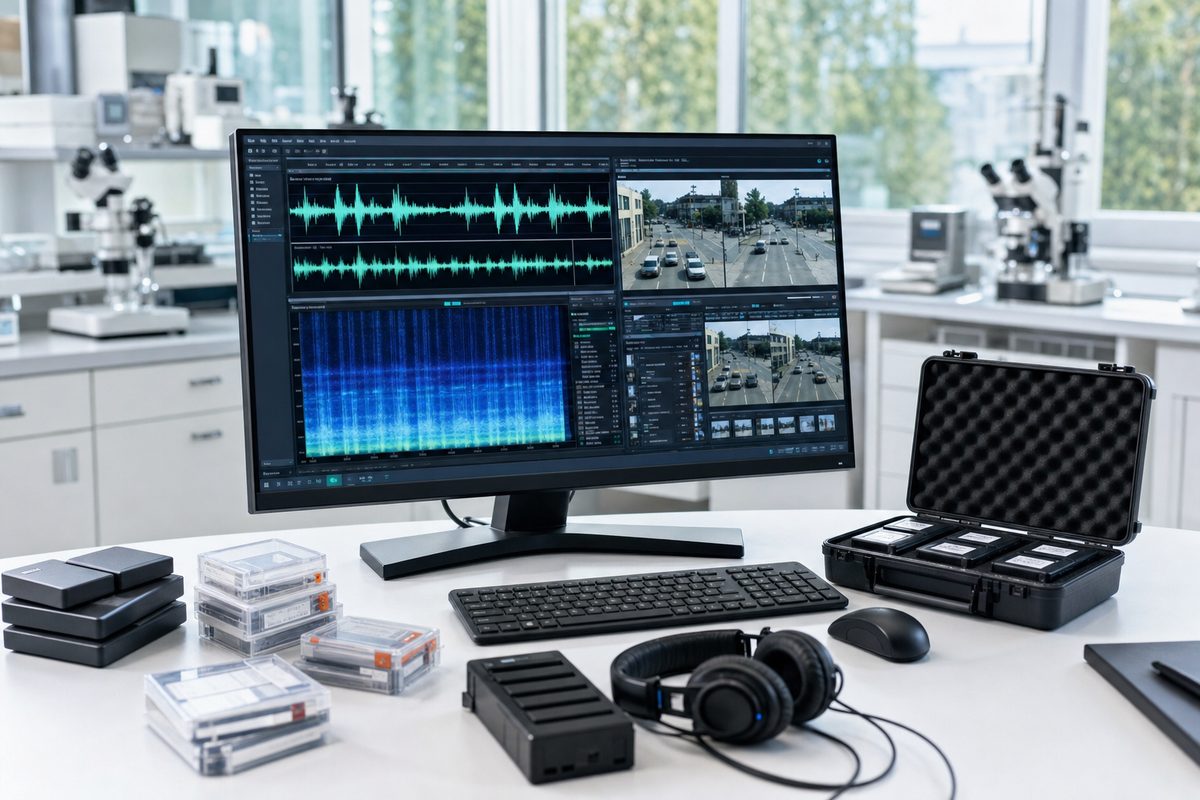
Use a method matched to the material
Confirm the examiner, laboratory and specialist methods needed for the material before work begins. Experience in digital evidence alone does not establish expertise in every speaker-comparison, image, video or language-model method.
Text origin is different from audio or image manipulation. Detector scores require relevant calibration and known false-positive, false-negative and out-of-distribution limits; they do not establish authorship or fabrication alone. Compression, missing originals, unfamiliar generation methods and inadequate comparison samples can leave the question unresolved.
Primary references: NIST forensic methods review (opens in a new tab) · C2PA provenance limits (opens in a new tab).
Who we serve
- Law Firms
- Insurers
- Corporations
- General Counsel
- Government Agencies
Scope
The Deepfake & Digital Evidence Lab
-
Voice Verification
Examination of disputed audio for synthesis, splicing and manipulation, including recorded-call and voicemail evidence.
-
Video Authenticity Analysis
Frame, compression and generation-artifact analysis to test whether footage is what it is presented to be.
-
Image & Document Authentication
Detection of generated, composited or edited imagery and of synthetically produced documents.
-
Metadata & Provenance Analysis
Container, encoding and device-signature examination, and reconstruction of a file's handling history.
-
AI Content Detection
Text, image, audio and video questions use different methods. A text-detector result is especially dependent on calibration and material outside its evaluated distribution; no score alone establishes machine origin or authorship.
-
Expert Testimony
Reports, declarations and testimony on synthetic media, written for a court that is new to the subject.
The engagement identifies the assigned qualified media examiner, applicable methods, actual laboratory or specialist participation and custody responsibilities. Confirm those resources before accepting a method-specific commitment.
Methodology
How the engagement runs

-
Acquire
Obtain the original file, not a re-shared copy. Provenance and chain of custody are recorded first.
-
Characterize
Establish how the file was produced, encoded and handled before asking whether it is authentic.
-
Test
Use several independent techniques, including artifact, signal, metadata and provenance analysis. No conclusion rests on one detector.
-
Corroborate
Cross-check against device, account and network evidence where it exists.
-
Report
A stated conclusion with its confidence and its limits, written to be examined by an opposing expert.
What counsel receives
A file another examiner could pick up.
The report preserves the questioned media, documents the comparison material and explains which indicators support or weaken each hypothesis.
No detector receives the final word. The opinion states confidence, limitations and plausible alternative explanations.
- Scope letter and stated assumptionsWhat was asked, what was examined, what was out of scope, and the assumptions the analysis rests on.
- Evidence handling recordAcquisition details, hash values, storage and transfer, and a chain-of-custody log for each item.
- Methodology statementTools, versions and procedures described so a second qualified examiner can repeat the work.
- Findings, separated from interpretationObserved facts first; expert opinion identified as opinion, with the basis for each conclusion.
- Limitations and unresolved questionsWhat the evidence cannot show, what was unavailable, and what further work would be required.
- Exhibits and supporting materialExtracted artifacts, timelines and schedules in a form that can be attached to a filing or a board pack.
- Authenticity opinion with confidence languageIndicators observed, indicators absent, and an opinion expressed in explicit confidence terms rather than a binary verdict.
Illustrative scope
Illustrative disputed-recording examination
Illustrative question: a disputed recording appears to authorize a payment. An examination would compare available original audio, encoding history, speaker material and suitable synthesis tests, then report supported observations and uncertainty.
Credentials & standards
- Media authenticity and synthetic-content examination
- Multiple independent authentication techniques per examination
- Chain of custody preserved from acquisition
- Expert reports and testimony when the assigned examiner is qualified for the methods and media at issue
Frequently asked
Common questions
Can you prove a video is a deepfake?
The examination addresses the supplied file and disputed question using supported methods suited to the assigned examiner’s qualifications. Possible conclusions include identified synthesis or alteration indicators, findings consistent with documented provenance, or an indeterminate result. The report states the supporting records, confidence, alternative explanations and limits; a positive finding is not assured.
Is deepfake analysis admissible?
Courts are actively testing this area. We write to that scrutiny: documented methodology, multiple independent techniques, stated error characteristics, and an examiner who can be cross-examined on all of it.
What do you need from us to start?
The original file wherever possible, its source account or device, and the handling history. A re-shared or re-encoded copy can still be examined, but it narrows what can be concluded.
Talk with an examiner
Discuss your matter and next step
Tell us the systems, evidence and deadline. We can review relevant experience, potential conflicts and the scope before engagement.
Since 1992 · 24/7 dispatch · Court-tested experts
Talk with an examiner
Discuss the matter and the next step.
Tell us what happened and what you need to find out. Speak with a GDF expert about how we can help.
24/7 hotline: 1-800-868-8189