
Independent technical practice
Digital Forensics & Expert Witness
Evidence preserved, examined and defended from the first forensic image of a device through testimony that holds up under cross-examination.
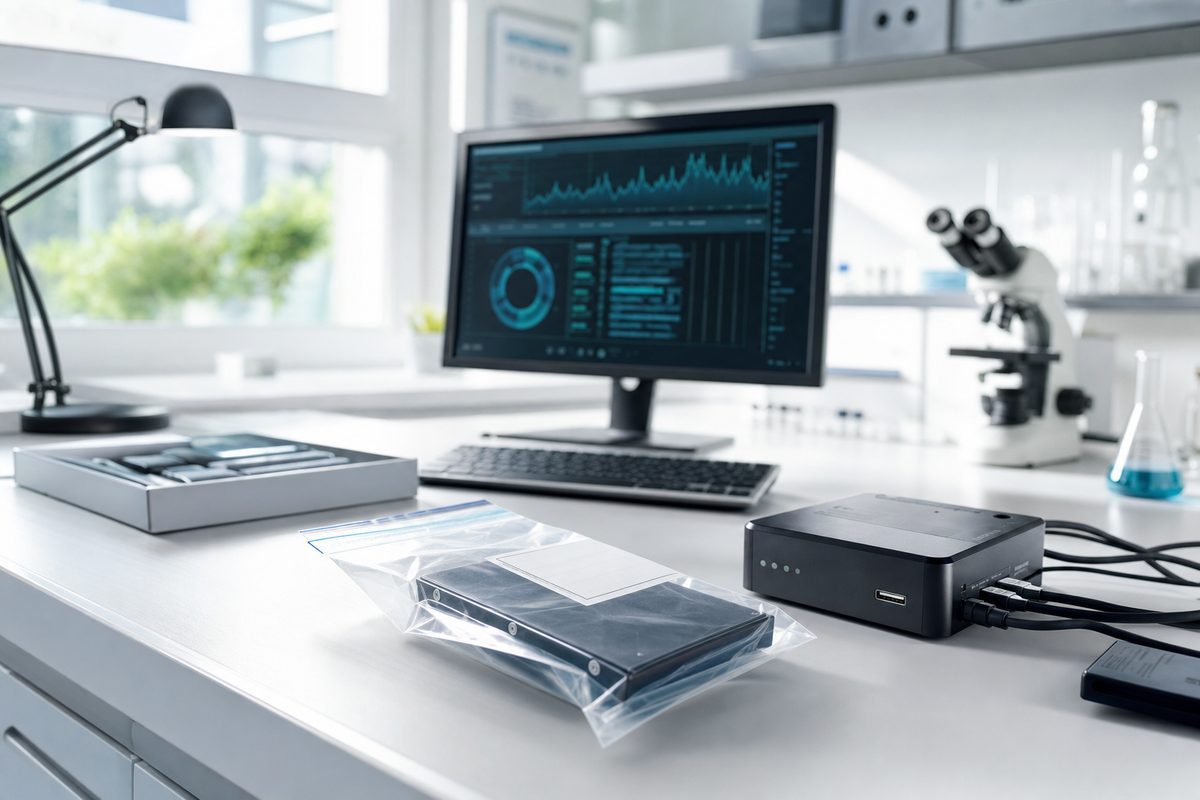
What the evidence can support
Identify the factual question, relevant platform, assigned examiner qualifications, authorized sources and period. Preserve original acquired records and the workpapers that connect an observation to a finding.
A missing record does not always establish spoliation, and an account event does not always identify a person. Explain uncertainty, alternative hypotheses and assumptions supplied by counsel; legal conclusions and admissibility decisions remain with counsel and the court.
Primary references: NIST forensic methods review (opens in a new tab) · Current Federal Rules of Evidence (opens in a new tab).
Who we serve
- Law Firms
- General Counsel
- Corporations
- Insurers
- Government Agencies
Scope
What we deliver
-
Mobile Device Forensics
Extraction and analysis of phones and tablets, including deleted messages, location artifacts and application data.
-
Computer & Email Forensics
Forensic imaging of workstations, servers and mailboxes, with header and account-level authentication of disputed email.
-
eDiscovery Support
Defensible collection, processing and production in the formats counsel and the court require.
-
Intellectual Property Forensics
Reconstruction of file movement, exfiltration and use of trade secrets by departing employees or competitors.
-
Electronic Exit Interviews
Preservation and review of a departing employee's devices and accounts before evidence ages out.
-
Expert Witness Testimony
Reports, declarations, deposition and trial testimony from examiners who have been qualified in court.
Engagements can be structured through outside counsel where privilege matters.
Methodology
How the engagement runs

-
Preserve
Legal hold guidance and immediate preservation, before routine activity overwrites what matters.
-
Image
Forensic acquisition with hash verification and documented chain of custody from the first hour.
-
Examine
Analysis against the questions the matter actually turns on, not a generic keyword sweep.
-
Report
Findings written to be understood by a judge, a jury and opposing counsel's expert.
-
Testify
Declaration, deposition and trial testimony, prepared with your litigation team.
What counsel receives
A file another examiner could pick up.
The report ties each finding to a source artifact and records how the evidence was acquired, handled and examined.
A court decides admissibility. The engagement file documents the method and foundation counsel may need to address it.
- Scope letter and stated assumptionsWhat was asked, what was examined, what was out of scope, and the assumptions the analysis rests on.
- Evidence handling recordAcquisition details, hash values, storage and transfer, and a chain-of-custody log for each item.
- Methodology statementTools, versions and procedures described so a second qualified examiner can repeat the work.
- Findings, separated from interpretationObserved facts first; expert opinion identified as opinion, with the basis for each conclusion.
- Limitations and unresolved questionsWhat the evidence cannot show, what was unavailable, and what further work would be required.
- Exhibits and supporting materialExtracted artifacts, timelines and schedules in a form that can be attached to a filing or a board pack.
- Testimony supportDeclarations, deposition and trial preparation with your litigation team, where the matter calls for it.
Illustrative scope
Illustrative departure evidence examination
Illustrative scope: an outgoing executive is alleged to have taken design files. An examiner would compare authorized laptop and cloud records, identify supported transfer evidence and document missing logs and alternative explanations.
Credentials & standards
- Founded in 1992; thousands of examinations
- Court-qualified expert witnesses
- Documented chain of custody on every engagement
- Industry-recognized examiner certifications (including EnCE and GIAC-level credentials)
Additional context
How the work takes shape
Practical detail for common digital evidence assignments.
Testifying experts who still practice
Testimony has been given across source code and patent disputes, operating systems and devices, networks, databases and enterprise platforms, hardware defect claims and biometric privacy matters. The examiners who testify are working practitioners rather than briefcase experts or academics, so the explanation offered in deposition matches how the technology behaves in the field.
Mobile, tablet and cloud evidence
Handsets and tablets are treated as one half of the record and the associated cloud accounts as the other. Messages including deleted messages, chat application data, call logs, browsing history, media with EXIF metadata, application artifacts and location data are recovered where they exist; locked devices are assessed case by case rather than promised. Device data is then correlated with provider and cloud copies so a timeline can be corroborated from more than one source.
Email and message authentication
Email examination compares available original messages, trusted header information and independent server, account or device records. Missing delivery records, unreliable headers and expired logs can limit conclusions about the sender or delivery path. Collection records document the method, integrity checks, inaccessible data and any known changes to the source.
Data exfiltration and departing employees
Intellectual property matters follow the data: cloud sync accounts, webmail, USB attachment history, document metadata and version history, installed obfuscation tools and chat artifacts. The same method supports structured examinations of departing staff, where imaging the workstation at exit preserves the record before it is reissued and answers the misappropriation question early rather than during litigation. Remote, mobile, court-ordered and hostile-environment eDiscovery collections follow the same chain-of-custody process.
Frequently asked
Common questions
Can you work as a neutral or court-appointed examiner?
Yes. We are regularly engaged as a neutral third-party examiner where both sides need one set of findings, and we accept court-appointed examinations under an agreed protocol.
How quickly can you preserve evidence?
Explain any risk of wiping, reassignment, overwriting or expiring logs when you contact us. We prioritize a source-specific preservation plan and confirm lawful authority, access, required methods and actual examiner availability. On-site collection or secure shipment is scheduled under the agreed scope; same-day dispatch is not guaranteed.
Will your report be admissible?
Admissibility is decided by the court, not by us. What we control is the record: methodology, tooling and chain-of-custody documentation designed to support defensibility, reports written to be tested under a Daubert or Frye challenge, and examiners who have been qualified and cross-examined in state and federal proceedings.
Talk with an examiner
Discuss your matter and next step
Tell us the systems, evidence and deadline. We can review relevant experience, potential conflicts and the scope before engagement.
Since 1992 · 24/7 dispatch · Court-tested experts
Talk with an examiner
Discuss the matter and the next step.
Tell us what happened and what you need to find out. Speak with a GDF expert about how we can help.
24/7 hotline: 1-800-868-8189