
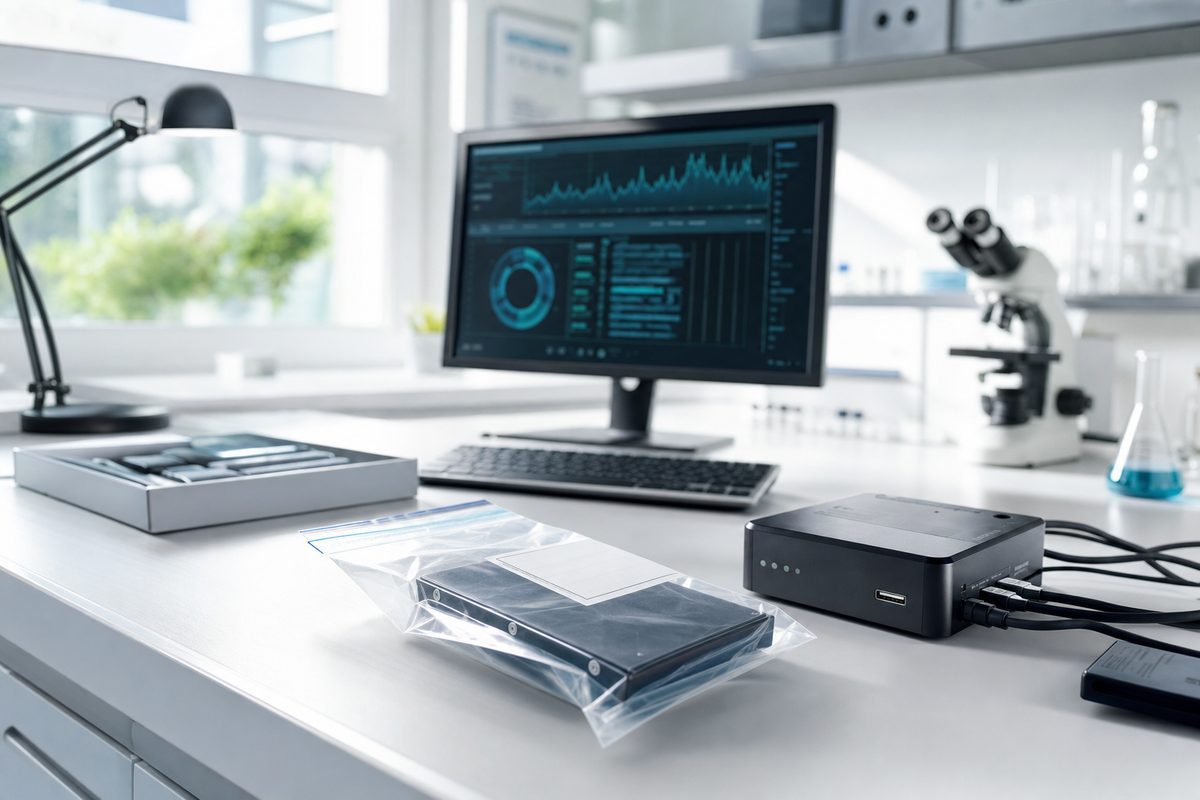
Persuasive digital evidence rests on a documented source, handling record, method and interpretation that another qualified examiner can check. That work begins before collection.
The practical question is not simply whether a file or message exists. Counsel may need to know where it came from, whether the collection changed it, which assumptions shaped the analysis, what the record does not establish and whether a different method would produce the same result.
Start with the question, not the device
A sound examination begins with a defined question. “Review the laptop” is too broad. “Determine whether files from a named project were copied to removable media between two dates” identifies a time window, likely sources and the limits of the conclusion.
The question should also expose competing explanations. A timestamp can reflect copying, synchronization, backup activity or an application process. A login can identify an account without proving who was at the keyboard. Writing down those alternatives early helps prevent the analysis from turning into a search for facts that support only one theory.
Preserve context along with content
The evidentiary value of an item often depends on information around it. For a cloud document, that may include audit history, account identifiers, sharing records and retention settings. For a mobile message, it may include the device database, attachment, participant mapping and application version. Screenshots can be useful illustrations, but they rarely preserve enough context to stand alone.
Collection notes should identify the source, date and time, operator, method, tool version, device state and any deviation from the plan. Cryptographic hashes can help show that a collected file has not changed, but a matching hash does not prove that the original source was authentic or that the interpretation is correct.
Make the method reviewable
A reviewer should be able to follow the path from source to conclusion. That usually requires more than a final export. Preserve the search terms, filters, time-zone decisions, parsing settings, exclusions and intermediate results that materially affected the answer. When a proprietary tool is used, explain the observable process and validate important findings through another source or method where practical.
- Separate observed facts from interpretation.
- Record uncertainty and known gaps instead of smoothing them over.
- Use the least destructive collection method that can answer the question.
- Retain enough working material for a qualified reviewer to test the analysis.
- Explain why excluded sources or records were outside scope.
Prepare the explanation while the work is fresh
Technical accuracy and clear testimony are different skills. A good report defines specialized terms, uses exhibits that can be read without the examiner narrating every detail and avoids claiming more than the data supports. If a conclusion depends on an assumption, state it. If an event could have several causes, identify what makes one explanation more or less likely.
Cross-examination often tests the boundaries of the opinion. A careful examiner should be ready to explain missing logs, clock drift, incomplete retention, tool limitations and alternative interpretations. Those limits do not automatically weaken the work. Hidden limits do.
A compact review before delivery
- Can each important exhibit be traced to a documented source?
- Are dates normalized to a stated time zone?
- Can another examiner identify the settings and steps that affected the result?
- Are fact, inference and opinion visibly separated?
- Does the report describe material limitations and plausible alternatives?
- Does the conclusion answer the assigned question without drifting beyond it?
The National Institute of Standards and Technology provides a useful foundation in SP 800-86, Guide to Integrating Forensic Techniques into Incident Response. Its guidance is not a courtroom rule, but its emphasis on preparation, collection, examination, analysis and reporting helps make the work easier to defend.
Scope note: This article is general information, not legal advice or a protocol for a particular matter. Collection decisions should reflect the relevant jurisdiction, preservation duties, system conditions and engagement scope.