
Biometrics testimony practice
Biometrics Expert Witness
Need to explain a fingerprint, facial recognition or other biometric system in court? GDF examines how the system collects and uses identity data, evaluates the evidence and prepares clear expert reports and testimony.
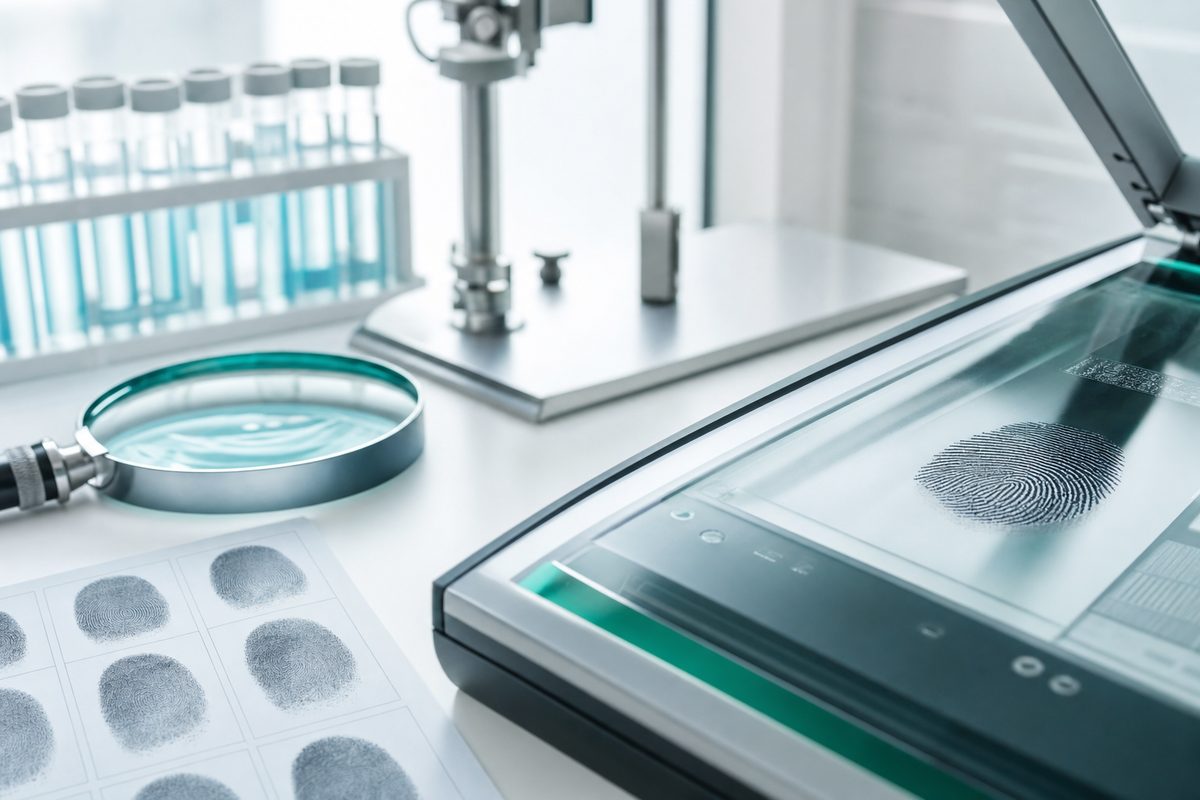
Preserve the conditions behind the comparison
Identify the questioned and comparison material, acquisition history, sensor and software versions, decision threshold and actual output. Record unsuitable or missing samples and the basis for any conclusion.
Confirm the assigned comparison specialist and applicable documented method before a biometric identity opinion. System behavior, a recorded match and a verified human identity remain distinct findings.
Primary references: NIST Face Recognition Technology Evaluation (opens in a new tab) · NIST OSAC forensic standards registry (opens in a new tab).
The engagement
Explain the biometric method and comparison results
A biometric-comparison opinion requires an examiner qualified for that specific modality and method. General system/database analysis can address enrollment, configuration, template handling, logs and data flows; fingerprint, face, iris or speaker comparisons are separately confirmed specialist scopes.
A biometric opinion is only as good as the units it is stated in. The report states the matching algorithm or its class, the threshold applied, the false match rate and false non-match rate the threshold implies on the operating distribution, the demographic subgroup performance where the record supports it, and the assumptions that would be tested on cross. Where a comparison is expressed in a likelihood ratio, the ratio is stated with its verbal equivalent, the sub-source proposition and the population under which it was computed.
Potential civil subject matter includes national BIPA class actions, technical voice evidence in TCPA call disputes, biometric-IP infringement in the Federal Circuit and ITC 337, and enterprise workforce-biometric matters. Criminal subject matter can include federal biometric evidence challenges under Daubert, post-conviction motions on latent print or voice comparison, and defense-side rebuttal of government biometric experts. The opinion is written so a rebuttal examiner in either forum can reproduce the analysis from the workpapers.
Scope
Face recognition and forensic face comparison
Use the relevant published NIST evaluation, algorithm and version as benchmark context. A benchmark rate is not the false-match probability of a particular case; population, sensor, image quality, threshold, search mode and deployment differ.
Fingerprint and friction ridge comparison
ACE-V methodology review, minutiae marking analysis, technical review of examiner conclusions, latent-to-tenprint comparison workflow and quality-value assessment. Written opinions consistent with OSAC friction ridge subcommittee guidance.
Forensic voice comparison
Likelihood-ratio based forensic voice comparison consistent with ENFSI guidelines, feature extraction review, reference-population selection analysis, and rebuttal of aural-spectrographic or voiceprint-identification testimony where offered on that older basis.
Behavioral biometrics for enterprise and fraud matters
Analysis of keystroke dynamics, mouse dynamics, mobile touch dynamics and gait recognition systems in enterprise fraud, insider-threat and continuous-authentication disputes. Evaluation of enrollment quality and adversarial resistance.
BIPA and biometric privacy class-action support
Technical analysis of what biometric identifiers a system actually captures, retains and shares, template versus source-image handling, retention and destruction policies as implemented, and technical evidence supporting or rebutting BIPA section 15 claims at class certification and merits stages.
ITC 337 and federal circuit biometric IP
Infringement and non-infringement analysis for biometric matching and template-generation patents, prior-art analysis for anticipation and obviousness, and Markman claim-construction declarations on biometric limitations that turn on matcher behavior.
Rebuttal, cross-examination and Daubert support
Independent review of opposing biometric expert reports and workpapers. Rebuttal declarations, cross-examination question sets, Daubert motion declarations and demonstratives sourced to the artifacts already in evidence.
Methodology
How the biometrics expert engagement runs
-
Retention, conflict and scope
Retention letter, biometric-vendor conflict check and a written scope note stating the biometric questions the opinion will address, the algorithm class, and the population and threshold assumptions the opinion will rest on.
-
Comparison and reproduction
Reproduction of the score or the categorical decision on preserved probes, galleries and matcher configuration where the record allows. Where reproduction is not possible, the report says so and states what can and cannot be inferred from the surrounding record.
-
Report drafting and peer review
A written expert report stating method, algorithm, threshold, error considerations and assumptions. When independent verification is part of the agreed scope, a second qualified examiner reviews material findings. Every opinion is tied to a specific artifact and a specific method.
-
Deposition, hearing and trial testimony
Preparation, deposition in person or by remote hookup, evidentiary hearing or trial testimony bounded by the report, and post-testimony support covering workpaper retention for appellate review.
Evidence commonly examined
Evidence reviewed
- Probe and gallery images, template files and matcher configuration exports
- Vendor product documentation, algorithm-version records and threshold guidance
- Relevant NIST FRTE/FATE reports, historical FRVT reports and applicable standards listed on the NIST OSAC Registry
- System audit logs, enrollment records and retention policy implementation evidence
- Opposing biometric expert reports, workpapers and score outputs
- Court orders, protective orders and any biometric-specific ESI protocols
What you can expect
What you receive
- Expert report or declaration stating algorithm, threshold, method and per-finding error considerations
- Reproducibility appendix with tool versions, gallery composition and any deviation
- Deposition and trial testimony, in person or by permitted remote hookup
- Rebuttal declaration on an opposing biometric expert's report
- Daubert motion declaration and cross-examination question sets on request
- Demonstratives sourced to templates or images already in evidence
Frequently asked
Common questions
Do you testify only in criminal matters or in civil BIPA cases as well?
The technical scope can support federal criminal matters, national BIPA class actions, technical voice evidence in TCPA call disputes, ITC 337 biometric IP and civil biometric-IP litigation. Counsel determines the legal theories, and a conflict check runs before an engagement is accepted.
Do you use likelihood ratios or categorical match language?
The report uses the language the underlying method actually supports. For forensic voice comparison and modern face-recognition scoring, likelihood-ratio language is used where the reference population and calibration support it. Categorical match language is used only where it is technically appropriate.
How is demographic performance handled in a face-recognition matter?
Where the record contains information sufficient to identify the demographic groups relevant to the analysis, per-group false-match and false-non-match considerations are stated. Where the record does not, the report states what the algorithm's public evaluation record shows and what additional discovery would be needed.
Do you handle latent print rebuttal in federal criminal matters?
A rebuttal engagement reviews the ACE-V documentation, minutiae marking, verification records and available bench notes. The analysis considers relevant OSAC guidance and published scientific reviews, including PCAST materials where applicable.
Can the examiner testify by remote hookup in a federal criminal trial?
Remote biometric testimony is possible only when the court permits it. The appearance plan addresses secure display of probe and reference material, score exhibits and any restrictions in the protective order before testimony begins.
Does the examiner accept work on a plaintiff BIPA class certification?
The scope can include declarations on template handling and destruction, plus independent review of defense technical opinions. A conflict check runs across relevant vendors and prior retentions before the engagement is accepted.
BIPA questions begin with how the system handles data
Biometric systems can involve sensors, enrollment records, templates, matching services and databases maintained by different parties. An examination should identify what the actual system collected and stored, how records relate to individuals and which components received the data.
A row count is not necessarily a count of people. Repeat enrollments, duplicate identifiers, migrations and incomplete records can affect the population reflected in a database. We document the normalization and deduplication rules and explain how they affect the result.
Illinois BIPA section 15 addresses matters including retention, collection and disclosure. Technical analysis can help counsel evaluate the relevant data flows and records; it does not replace counsel’s interpretation of the law. A system label such as fingerprint or template does not, by itself, settle every factual or legal question.
Understand the biometric record
- Enrollment
What is collected, and how is it identified?
- Template and matching
What is derived, stored and compared?
- Database population
How do duplicates and migrations affect counts?
- Retention and sharing
What evidence supports storage and recipients?
Rogers v. BNSF Railway: examining biometric-system records
GDF’s published case study describes work for plaintiffs’ counsel involving restoration and analysis of identity-verification database records, including normalization and deduplication. The technical task was to explain the records and the population they represented.
This is a useful example of how database analysis supports a biometric privacy matter. The published account also distinguishes the original judgment, the later damages decision and the settlement. Read the BNSF case study and linked case records.
Technical references
Meet the examiners
For biometrics expert witness work, discuss the disputed questions and the experience needed before defining the engagement. Joseph Caruso is profiled in our expert directory. Meet the GDF team and discuss the technology, questions and availability with us. The expert selected for a matter depends on its scope and the required experience.
Talk with an examiner
Discuss your matter and next step
Tell us the systems, evidence and deadline. We can review relevant experience, potential conflicts and the scope before engagement.
Since 1992 · 24/7 dispatch · Court-tested experts
Talk with an examiner
Discuss the matter and the next step.
Tell us what happened and what you need to find out. Speak with a GDF expert about how we can help.
24/7 hotline: 1-800-868-8189